Observe!

Currently.....

Currently.....

April 19, 2023

Happy 26th Birthday to The Angry Beavers


Happy Birthday to one of the most underrated Nicktoons out there. 


This theme song is still one of the best ones out there.

                                                   Angry Beavers creator Mitch Schauer
 

Created by Mitch Schauer, aired from 1997 to 2001 and features the two best voice actors in the business, Nick Bakay (also the voice of Salem on Sabrina) and Richard Steven Horvitz (who is most well-known as Zim of Invader Zim and Billy of The Grim Adventures of Billy & Mandy). Schauer was given the chance by Nickelodeon to come up with three ideas for an animated series, settling on beavers, based on his observation of real-life beavers . Schauer refer to the premise as "...two politically incorrect beavers. They hated everything that was faddish and it was contemporary", based on Schauer who said he like to riff on anything that's popular with society and desire to go to the opposite direction. The decision of the title "The Angry Beavers" came from Schauer's attempt to do the opposite of what was common with animation from the 80s, often cutesty and cuddly (The Smurfs, Care Bears), and was also against wanting the beavers to look cute, as a result of the infamously hideous designs of even the humans in the series.

"I thought I'd do the opposite of what people expect from cartoon characters, which are usually happy animals. I made mine angry. Then I went down through a list of silly animals and decided on beavers." - Mitch Schauer


                               (A little shout out to Old School Lane, an underrated YouTube channel)


The formerly lost and unaired pilot "Snowbound" featured a nice introduction to the Beavers, and includes their original designs.


The original designs of the beaver brothers in the pilot

The Angry Beavers centers around two beaver brothers who live on their own in a dam, you have the laid-back Nobert and the irrational and playful Daggett. While the premise may seem simple, it's how it's executed is what makes the show so unique and memorable, and a truly underrated gem.

While it was never to the level of popularity of Rugrats and SpongeBob SquarePants, it has developed a devoted cult following since it's debut (especially with my generation and the generation after). It was considered to be THE Nicktoon of the late 90s to drag in the teenage and adult demographic who enjoyed the sarcastic, dry wit and uniquely bizarre nature, and pop culture references to the culture of the 60s and 70s of the series. The show built upon some of the simplest premises in the world, such as a blinking contest, staying up all night, doing a dare, ect, but it had it's own distinct way of fleshing out these premises through such a bizarre and humorously satirical approach, building up on the absolute absurdity of the already absurd situation. The Angry Beavers was one of the few cartoons that was weird, but knew how to be weird AND funny without just being weird for the sake of it, like some other shows had.

There was level of Mr. Schauer's personal vision put into the show that made The Angry Beavers, as I've said, an underrated gem, but also a truly unique cartoon. Schauer said he had Nick Bakay and Richard Horvitz add-libbing was inspired by classic Hollywood director Howard Hawks, giving the show some flavor in it's dialogue, a lot of times Nobert and Daggett do this......thing of just screeching distinctively when speaking or screaming, it's hard to describe, you'd have to really hear/see it yourself, and I like the way Nobert would pronounces words, like he says "mou-vaie" instead of movie, or "imberasse" instead of embarrass. The music in the show, composed by Charlie Brissette (who also composed for The Adventures of Jimmy Neutron) is this soothing laid-back jazz music that is really nice to listen to and is iconic on it's on right, inspired by some movie from the 1960s. I will admit, I like the ending credits themes more, which is a sped up version of "Baby Elephant Walk".


The Angry Beavers managed to be one of the few shows that stayed pretty consistent throughout it's run. The first three or four seasons were some of the show's best, but I wish I could say the same for much of the fourth and the entire fifth season. Not everyone talks about this, but, while the later seasons were not out right bad, it was pretty clear the show had somehow started to rot. The two beavers were heavily flanderized (meaning: emphasizing on the primary traits of a character) to the point where they became somewhat insufferable, Nobert became too jerkish and Daggett ended up becoming too dumb to live. I love both the characters, there was a moment in the show where Nobert's jerky personality was enjoyable and he had his moments of either being a nice big brother or his ideas backfire, and a moment where Daggett's eccentric behavior was fun too, but he devolved into being a dimwit, whereas early on, he was more irrational and weird than just straight up stupid, and he showed some level intelligence too. 

Many Beaver fans know the story of the tension with Schauer and Nickelodeon, which is what eventually, supposedly, lead to the show's cancellation. During the second season episode "Alley Oops", involved the scene where Nobert says "Oh, shut up, Daggett", Nick, for whatever reason, suddenly had an issue with a character on their shows saying "shut up", that had the scene being redubbed to have Nobert say "Shush up, stupid". There's an interesting story behind the idea of the episode "The Legend of Kid-Friendly", inspired by the numerous of notes Mitch Schauer and his team would received from Nickelodeon to keep the content "kid-friendly", and so this episode was created as a response to that. Plus, instead of the usual order of 65 episode (or in some cases 52), it was cut down to 62. 

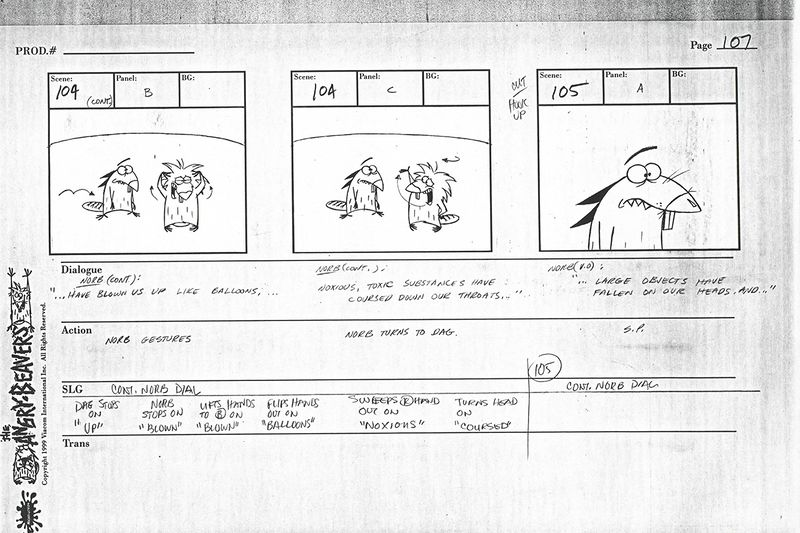
Now to the meat of the tension, the unfinished episode, "Bye, Bye Beavers!". An episode that had a soundtrack of voices completed and storyboards resurfaced.


April 14, 2023

Illustration of the day


Some quick, simple little drawings I did of Mickey Houndfair's dad, Mickey Houndfair Sr. serving an ice cold ice cream soda back in his day, in black-and-white, directly inspired by this photo on the bottom.
                             
Courtesy of Wikiapedia

I'll probably do more of these next time.

April 12, 2023

Questo's World title card


A hand-painted promotional title card for Questo's World I did for nearly two days straight.

I figured this title would give those who are not familiar with the comic a good idea of what it maybe about, from the look of the illustration.

Pencil sketch of the title card


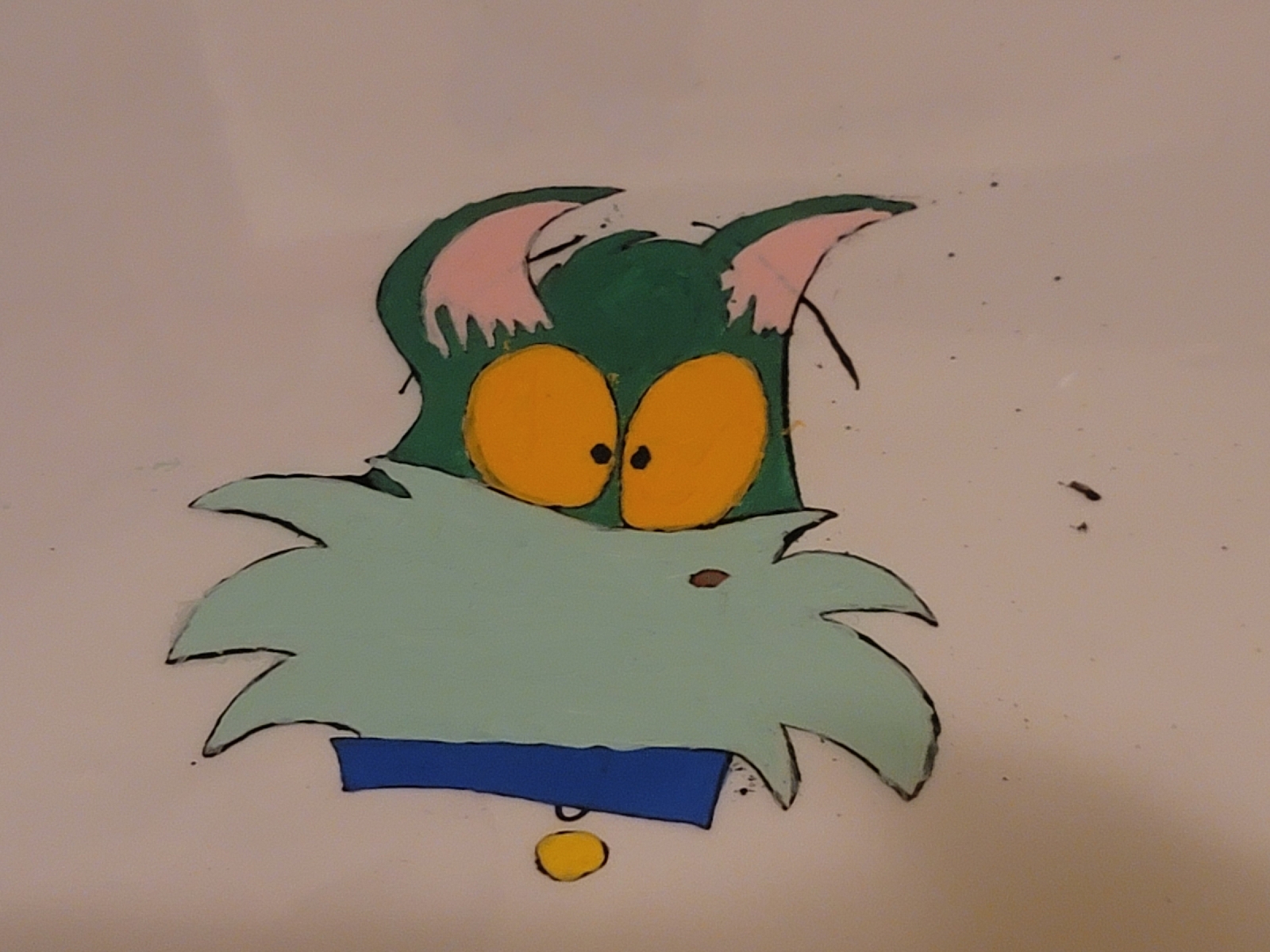
'Cel' painting of Questo (front)
Questo 'cel' painting (back)


April 4, 2023

Happy 25th Birthday CatDog: A Misunderstood Cartoon

One of my all-time favorite Nicktoons of the 1990s, CatDog. Created by illustrator and book author, Peter Hannan, whose also one of my favorites, having such a wacky, dry sense of humor.

                                                CatDog creator Peter Hannan

Premiered on April 4th, 1998 and ended on June 15, 2005. It's a show that revolves around the lives of two domesticated animals attached to each other and the town they live in, called Nearburg.

    The cast of CatDog from right to left: Eddie the Squirrel, Rancid Rabbit, Mr. Sunshine, Winslow, Cliff, Lube and Shriek collectively known as The Greaser Dogs.

I once a small chat with one of the show's original fans, Kristen, who created the CatDog's First Fansite. So, shout out to her and her appreciation for CatDog, and her understanding of the series itself.

                                             A great insight of CatDog, written by Kristen herself
                                         

                             Picture of CatDog in various roles, signed by Peter Hannan to Kristen

There has really been a lot to say about such a bizarre concept like CatDog, other than it's original and make for some good humor and stories. I give Nickelodeon some credit for greenlighting anything that came to them back then.


CatDog is also a show that, ever since it's debut, was hated by many, even to the point where it was considered by some to be Nickelodeon's downfall. It is well-known at this point that the most common criticism this show gets is being "too mean-spirited", the number one thing you hear whenever almost anyone mentions the show. I argue that the show wasn't as mean-spirited as everyone makes it out to be, that it feels more like an exaggeration, but then to some degree, I can kind of see where they come from.

(I'll say this, as I wanted to get this off my chest for a longtime, that I have begun to hate the word "mean-spirited" because how it's used as such empty criticism towards a cartoon, as if cartoons are never meant to have anything bad happen in it. Though, in some cases, I can understand.)

Despite being one of my favorites, I'm not afraid of admitting that it does have it's flaws. Despite it rather original, one-of-a-kind premise, and some episodes and moments that were pretty great and stick to the show's charm, one of the flaws CatDog has is the rather redundant way the beat down the whole "cat-and-dog share the same body" shtick, such as Dog chasing after a garbage truck that was funny and entertaining in it's debut episode "Dog Gone", but ended up becoming rather tiresome after a while. Sometimes jokes don't hit their mark and come off as rather corny, and some characters feel like they had either some wasted opportunity. I would've loved to see the crew do more with Mervis and Dunglap, and Eddie the Squirrel, who's whole character was that he wants to be a Greaser, but can't because he's a squirrel. The character was put to good use in episodes like "New Cat in Town", about Eddie taking over Nearburg, "All You Need is Lube" and "Squirrel Dog" his debut episode. Out of all the minor characters, Mr. Sunshine is easily the most memorable, especially his one scene in "Party Animal" where he does a magic trick.


But now, back to the positives. I feel that what may have been ignored with this show is the metaphors and allegories all throughout. I feel a work of art can really resonate if there are some things in it you may not get at first, until you really start to look at it more than once. CatDog is an example of a cartoon with some subtleties to real world issues like racism, imperfections and bureaucracy. The two-headed creatures are mistreated by everyone, mainly due to their appearance and live on the outskirts of Nearburg, which gives it a pretty uniquely isolated feeling, and the fact they know that they have each others back since their attached is something that truly resonates throughout, especially with one episode that highlights this, "CatDog Squared".


There are other episodes that highlight the show as a whole like everyone's favorite "CatDog Catcher", which many have noticed as a straight-up jab at the political/government system by none other than Rancid Rabbit. "Dog Gone", the debut episode that perfectly establishes CatDog and their relationship. "Silent! Please", acting as a silent film parody, but with CatDog going about their usual day. "It's a Wonderful Half-Life", showcasing even more of CatDog's brotherly relationship, shown in the dreams they have of being seperated. "The Lady is a Shriek", "Shriek on Ice" and "Rich Shriek, Poor Shriek", three great episodes revolving around Shriek and fleshing out her character moreso, with the former being one of the funniest and most quotable episodes of CatDog. "The Island", one of the show's more uniquely bizarre episodes that blends it's weirdness with heartfelt moments between the titular characters. "Beware of Cliff" and "Squirrel Dog", about Cliff turning over a new leaf, temporarily, of course.

The show is also known for including Tom Kenny, whose most famous as the voice of SpongeBob SquarePants. Kenny and Jim Cummings were such a great combination to the dynamic of CatDog themselves.

One thing I don't see ever get brought up is the attention to detail in the environment. The CatDog house is one of them. Such a weird and distinctive design for a cartoon house.


This also goes for a bunch of other things in Nearburg, too.


One of my favorite characters is Rancid Rabbit. His voice, his design and his demeanor. Rancid seems to be a jab at authoritarianism and bureaucracy, popping out of nowhere, having every job known to man, also providing a great mystery as to why he has some many jobs. He's everywhere, but no one questions it. But also, he has got to have the weirdest design for a cartoon rabbit.

Anyways, that's all I have to say for know about CatDog. Hope you fans appreciate my little overview of the show.


March 21, 2023

UPA: The Somewhat Forgotten Cartoons


More often than not, a majority of people I've talked to will always have little to no familiarity with UPA (United Productions of America) outside of, of course, Mr. Magoo, (voiced by Jim Backus of Gilligan's Island fame). 
                                                     Jim Backus, original voice of Mr. Magoo

Okay, now for a short intro:

*UPA was an animation studio founded in 1941 (as Industrial Film and Poster Service) by John Hubley, former Disney animator who left during the 1941 Disney Strike. 


                                     John Hubley and his wife, Faith Hubley

Mr. Hubley has expressed his frustration over the ultra-realistic style of Disney animated productions, feeling that animation didn't have to be an overt imitation of real-life. Part of what also inspired the UPA style was Chuck Jones's The Dover Boys, which was considered to be one of the first cartoons to break away from the "Disney look" (over what was then known as the "modern cartoon" look by The Dover Boys according to animation historian Michael Barrier), proving to Hubley and everyone else that animation could experiment and simply didn't have to follow one way of doing cartoons. And the rest is history. 


             The Dover Boys at Pimento University; or, The Rivals of Roquefort Hall (1942) - Chuck Jones

"In 1943, Hubley saw the Warner Brothers cartoon The Dover Boys. It's linear drawings and stylized images, so different from anything else done at the time, helped prove to him that his thoughts on animation were correct. Hubley would often speak fondly of the way Jones used new animation techniques on a story of comedy on a human level, as opposed to the typical cartoon of comedy for comedy's sake."

Noell K. Wolfgram Evans (Animators of Film and Television, pg. 18)

Chuck Jones had already shown his interest in breaking away from the traditional Disney style he had done in his short prior to The Dover Boys and The Draft Horse to create a revolutionary style that predated UPA, equal courtesy to background artists' John McGrew and Gene Fleury.

                                      Case of the Missing Hare (1942)

                                        Odor-Able Kitty (1945)


The Unbearable Bear (1943)

He also moonlighted over at UPA to direct a World War II-themed short film sponsored by United Auto Workers, called Hell-Bent for Election (1944), written by Robert Lee. The film gave Jones a bigger opportunity to experiment more freely with flat, stylized graphic designs, something he was almost fired for doing when he did The Dover Boys.


What one needs to remember is that, before Hanna-Barbera and their infamous limited animation (not riffing, I love their works), there was UPA, and before UPA, was The Dover Boys, which helped showcase a different approach to animation and it's capability to unique storytelling, humor, visuals and character design that's possible ONLY in the world of animation, and UPA showcased this even more. UPA's films had a quite an audiences in mind, whereas Disney was often geared towards a more family-friendly audience, Warner Bros. and MGM were fixed to making the cartoons for themselves but still entertained young and old alike, while UPA can either have their films made for children (Madeline, Gerald McBoing Boing), adults (Fudget's Budget, Rooty Toot Toot and the groundbreaking The Tell-Tale Heart, the first animated film to receive an X-certificate in the UK from the British Board of Film Censors) or both in many cases.
Madeline (1952) - Bobe Cannon

Gerald McBoing-Boing (1950) - Bobe Cannon
Rooty Toot Toot (1951) - John Hubley
                                                          The Tell-Tale Heart (1952) - Ted Parmelee
                                                    
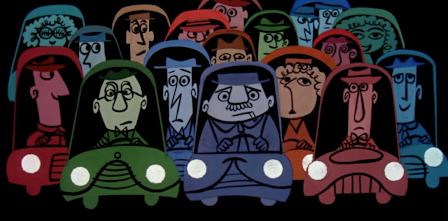
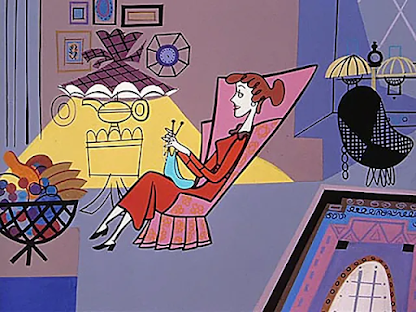
Because the popularity of Disney, Warner Bros. and MGM, UPA somehow became lesser-known, even among a good amount of animation buffs, despite playing an important role in the history of animation and introducing a stylized minimalistic sophisticated style, influenced by mid-century art, that became the standard of 50s and 60s animation as a way to cut cost in the increasingly expensive medium. Their style would also serve as an influence for animators of the Renaissance of Animation, Genndy Tartakovsky and Craig McCracken, which was the "trendy" animation style from the late 90s, all throughout the 2000s, mixed with both UPA, Hanna-Barbera and Jay Ward (Rocky & Bullwinkle), a unique mixture of both styles for these dialogue-heavy, visually innovative shows (Dexter's Laboratory, Powerpuff Girls, ect.)

The Jaywalker (1956) - Bobe Cannon
Gerald McBoing-Boing (1950) - Bobe Cannon
The Unicorn in the Garden (1953) - William Hurtz


UPA stands out for their unique influential art style, experimental animation and visually narrative short films, truly sophisticated works of art. Another thing that set UPA apart was the lack of the funny animal, slapstick comedy genre of Looney Tunes and Tom & Jerry, something Hubley voically wanted to go against to have animation be seen as an art. As someone who deeply admires UPA, I will say that even slapstick comedy (and comedy in general) is still an art, regardless what the Oscars and critics say, there's definitely a reason why the Warner Bros. and MGM cartoons are still fondly looked at today, because of their great writing, sense of timing and irreverent sensibility, something that does take a lot of work to make a cartoon a true classic. Many critics have pointed out how Chuck Jones's later works, such as Now Hear This and High Note were some of the more UPA-equse works at WB, showing how much Jones embraced this style, as opposed to the other directors at Termite Terrace, speculated because UPA won more Oscars and more critical acclaim than WB themselves. Another UPA type cartoon from WB is Robert McKimson's Bartholomew Versus the Wheel (1964) and Alex Lovy's Norman Normal (1968).
Now Hear This (1962) - Chuck Jones and Maurice Noble
Norman Normal (1968) - Alex Lovy

Bartholomew Versus the Wheel (1964) - Robert McKimson

Other studios were following suit to this art style too, other than Warner Bros., MGM, Walter Lantz, Disney and DePatie-Freleng Enterprise (Pink Panther) did this as well.


The Pink Phink (1964) - Friz Freleng and Hawley Pratt

Toot, Whistle, Plunk and Boom (1953) - Ward Kimball and Charles A. Nichols

I didn't watch any of UPA's works until a few years back, which was when I immediately fell in love with them and made even more of an impact on me as an artist and animator. When first looking at their cartoons, it made me see that there can be more than one way animation can be done, not just the "funny animal, slapstick comedy" routine I mentioned earlier. It's proof that you can do ANYTHING in animation, if you put your mind to it. Look at Japanese anime, there are tones of genres anime has dealt with that showcase the amount of variety in animation, so American cartoons can do the same damn thing, something I would encourage to anyone. Cartoons and animation can be done gracefully if not only you put your mind to it, but if you have the right people doing it, one who understands and knows their history of animation, knows the advantages of animation, and chance to show the public animation can be for EVERYONE!!!!!

My most favorite UPA shorts were Rooty Toot Toot, Fudget's Budget, Christopher Crumpet and The Miner's Daughter
Rooty Toot Toot (1951) - John Hubley
Fudget's Budget (1954) - Bobe Cannon
Christopher Crumpet (1952) - Bobe Cannon

The Miner's Daughter (1950) - Bobe Cannon

When regarding Questo's World (my original webcomic), there are people who say the art style reminds them/looks like 90s Nickelodeon or Craig McCracken, which does feel more like a compliment than anything else to me. But the choice of these stylized and abstract backgrounds and character designs was a design style I knew I wanted to use in Questo's World, as it easily fit the subject matter dealt within the comic, as a person obsessed with symbolic, metaphorical and allegorical elements in media. But, I still like to think of the style I use in my comics as "Warner Bros meets UPA" kind of style.


In short, UPA shouldn't be this overlooked of an animation studio and proof that American cartoons have some kind of variety in their work. If you haven't seen any of them yourself, the first one I would recommend watching is Rooty Toot Toot.


It's nice to see some acknowledgement of UPA's existence, in honor of this video. So, shout out to The Royal Ocean Film Society's YouTube channel.