ⓒ 1999 Cartoon Network/AKA Cartoon
Created by: Danny Antonucci
Production company: Cartoon Network, a.k.a. cartoon, Warner Bros. Domestic Television
Original run: January 4th, 1999 - November 8th, 2009
It goes without saying at this point that Ed, Edd n’ Eddy is one of the Cartoon Network’s best shows. Not only was this was one the network’s best series, but a cartoon that had it’s own identity and couldn’t be mistaken for any other show out there. A show that didn't try to be like any of it's contemporaries, as well as a style and concept that couldn't be repeated more than once and something that made the series special. A truly one-of-a-kind show. EEnE still holds the record as CN's longest-running show, as well as the longest-lasting show from the Cartoon Cartoons era of said network.
This show, according to Mr. Antonucci himself, originated from a dare to create a kid-friendly show, opposite to what he had done in the past then, such as the 1987 cult classic independent short film Lupo the Butcher and the infamously panned MTV series, The Brothers Grunt.
ⓒ 1987 International Rocketship Limited
ⓒ 1994/1995 MTV Networks/AKA Cartoon
After the cancellation of The Brothers Grunt, Antonucci would design three characters, originally intended for a commercial, who later became the main three of EEnE. Antonucci faxed a one-page concept sheet to Cartoon Network and Nickelodeon, which at the time where THE networks who developed the whole concept of "creator-driven cartoons" (what CN collectively called "Cartoon-Cartoons") where animated shows would be done entirely from the artist's own vision without any executive meddling thanks to the lack of restrictions cable networks had, willing to take risks that have succeed in the long run, something that happens once in a blue moon in these days. Both networks responded with great interest, however, Nick demanded creative control, while CN gladly let Antonucci have all the creative freedom. It's hard to say how different EEnE would be if it was a Nicktoon. EEnE is also noted for being the first CN show to be produced outside of Hanna-Barbera and is among one of the very few animated shows to pass the seven-minute pilot rule, going straight into making the whole first season, originally set premiere in November 7th, 1998, but was moved to January of '99 due to post-production problems. It would immediately become one of Carton Network's highest-rated and most acclaimed shows, attracting 31 million households, shown in 120 countries and developed a massive following of children, teenagers and adults.
While I do favor other CN shows, such as Courage the Cowardly Dog, Johnny Bravo and Regular Show, there's something about EEnE that truly makes it shine equally. Like it's contemporary show, Courage, they were shows created by animators who have worked in independent animation, so naturally, their works differ from your average mainstream animated productions, we get a taste of their own personal outlook of animation and their unique sensibilities put into their work, something that can only be done when your work is not tampered with studio politics: mainly when involving profitability and enforcing the cookie-cutter crap we commonly see from other TV shows. Courage is an interesting point to bring up here, as it and EEnE were very similar to each other, in it's production style. They're both very director-driven shows (all episode of both shows were directed by their respective creators), storyboard-driven, character-driven, both are deeply reminiscent of the Golden Age of Animation, as they not only go back to the old-school style of slapstick comedy (i.e. pie in the face, smashed with a hammer), but they're very experimental with both it's animation, stories and tone as it was the case of animation in it's youth. It's characters are simple, yet they've got a lot of depth, and Eddy and Courage are the most complex, if tragic, characters, a concept one can appreciate when they get older (though, EEnE was more comedy-based and Courage was a horror-comedy). Both of these shows had their own distinct approach to storytelling, humor, characterization, mysteries and relatability that made these cartoons such memorable enduring cult classics. It's part of what made them both so compulsively watchable, consistently funny and consistently strongly-written cartoons with many tricks up their sleeves. It's good to see shows that were never tainted with commercialization, it happened to the great animation giants out there, The Simpsons and SpongeBob SquarePants being prominent examples of shows that were great in their heydays, only to have the art and charm ruined through heavy merchandising, censorship (as of recently that is) and stayed on the air for way WAY too long for their own good.
As mentioned at the beginning, EEnE was a show that was truly it's own. It's a show that had your typical Three Stooges-type trio; the small short-tempered, the skinny genius and the tall idiot, who navigate their life as outcasts whose purpose of scamming the kids are just wanting to be accepted, but have the wrong way of doing it. Part of the charm of the show, is it's unpredictability. Every moment of the series screams creativity. When you really watch the show, you can predict that there are plenty of ideas in it's stories, humor, characters, animation and general approach that proves to have a voice of it's own without trying to be a copycat of it's fellow cartoons. The show never cuts short on a moments of subversion, whether it's the execution of jokes, it's storyline or it's characters. Many episode do consist of some of the simplest ideas, but adds it's own twist to it, whether it's running to the Candy Store on time, trying to watch a monster movie marathon, attending a sprinkler party or playing tag, all played through from the show's distinctively comedic, imaginative and subversive nature. You can do anything with such simple ideas if you have, not only a vision, but your own unique take on it. EEnE also had it's fair share of fourth walls, though they were subtle, for most of the part. Characters would refer to conventions of animation and television (my personal favorite is "I hate clip shows!") in a way that was different from other meta joke-induced shows that were more overt and "in-your-face", like Tom Ruegger's Tiny Toon Adventures and Animaniacs. This show, undoubtedly, has some of the most fast-paced jokes and timing ever put in television animation, that it's impossible not to laugh-out-loud at. EEnE was not a show where they try to teach lessons or anything like that, which is part of the charm and something that set it apart from other shows with kids as the main characters. EEnE was distinctively subversive, which is the key to the show's appeal, the series' general demeanor was subversive. Another thing that makes the show uniquely funny is it's use of sound effects that enhances the action and comedy, like the beloved "sumo sound" played throughout EEnE. Like, the "sumo sound" by itself, is not funny. But it's the way that it's used that makes it's screamingly hilarious. I dare say that EEnE's fast-paced action made the slapstick comedy in the show so gut-bustlingly funny and marvelously timed, right next to the king of cartoon slapstick, Tom & Jerry.
While the main characters are established to be Ed, Edd and Eddy, the true main character is Eddy. His flawed characteristics is what makes the show and what made him one of CN's most compelling protagonist.
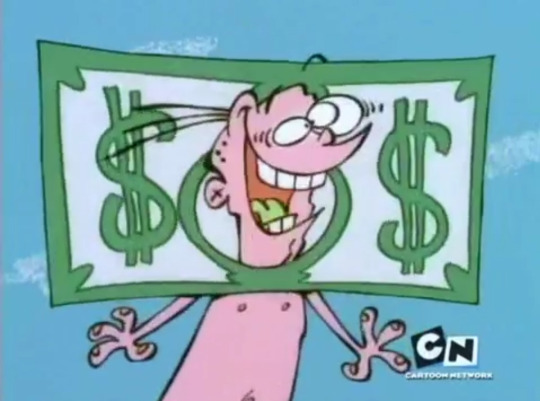
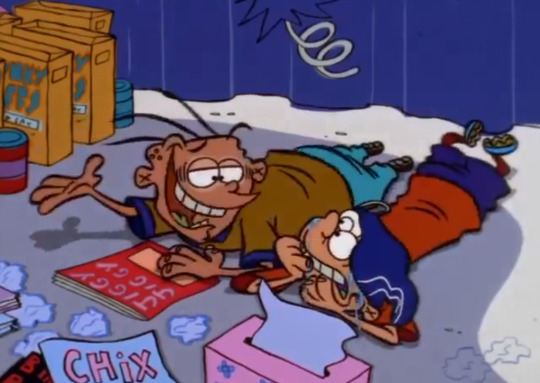
Season 3's Gimme Gimme Never Ed
Many if these flawed characters, like Donald Duck for instance, have that charm where their imperfections make'em shine, something that keeps them entertaining to us, and Eddy is especially that. We relate to failures more than winners in fiction, like Charlie Brown, as Eddy is a truly relatable character who knows what he wants, but doesn't do things the right way. Eddy is one of the funniest characters and someone to be sympathized with, but at the same time, given his arrogance and hot-temper, gets karma coming to him that we don't necessarily mind, but it's not like we're intended to hate Eddy. Compare Eddy to other jerky characters like George Constanza, Winslow, Helga Pataki, Nelson Mutz, Eustace Bagge, Angelica Pickles, Eric Cartman, Beavis & ButtHead, Uncle Ruckus or Rick Sanchez, they're funny and interesting themselves, and come off as more compelling as equally as the "goody-two shoes" characters. These are characters who are obnoxious, yet the writers mastered writing their dickish attitudes somehow, to the point where the audiences aren't turned off by them. Eddy stayed consistently in-character throughout the show. Season-by-season, Eddy becomes more and more fleshed out as a character. Eddy simply is someone who wants to be accepted, but just does it the wrong way and just tries too hard. Many episodes highlight his desire for money and attention, often to an absurd and hilarious degree. For example, in "Stiff Upper Ed", he wants to join in Sarah and Jimmy's "Rich Club", which is, of course, make-believe, but the humor and conflict comes from Eddy just trying too hard to get in, despite being run by the same people who not only hate him, but HE hates back. The rest of the cul-de-sac kids do get invited and The Eds are finally given a chance, but, in the end, stuck as butlers, instead. The humor, again, derives from Eddy not caring about the mistreatment he's getting throughout, as he's just happy to allowed in the "Rich Club", as oppose to how Eddy usually just gets frustrated by the kids' treating him like crap, but seriously, it'd be absurd to think how one would go through all that trouble just to be in something, even if it's either make-believe or contains the people that hate you. Other great examples comes from Season 2's Cry Ed, features Eddy intentionally hurting himself to get the attention away from accident-prone Jimmy, leading to some of the show's most violent and broadest slapstick comedy out there, while Season 3's "Gimme, Gimme, Never Ed", a hilarious Jonny-centric episode about Plank "wanting" to try some of Eddy's daring rides. This episode was really Jonny and Plank at their best as characters, showing how special of a character Plank, a literal piece of wood, is. This episode is one of the many examples of how Eddy will literally trade his own life for a quarter. Not only do many episodes highlight Eddy and The Eds, but we occasionally are immersed in with the others', the kids and The Kankers'. "See No Ed" and "Run for Your Ed" were some of the best episodes featuring those characters, and particularly "See No Ed", being the only episode in the whole series where the main trio don't show up until the very end, instead, we are enchanted by Kevin, Rolf, Nazz, Sarah, Jimmy and Jonny 2x4, and there true feelings about The Eds, foreshadowing many things to come in later seasons, while "Run for Your Ed" shows The Kanker Sisters at their best when they're not violating The Eds. This show has the opportunity to really give us some really great plot-driven stories, along with some very iconic character-based comedy without the reliance on any topical jokes, pop culture references or use of technology (i.e., video games, cellphones, computers).
And now for the animation. The wiggling outlines make the show! While it doesn't cater to everyone's taste (some people I've known could never get into EEnE, because of the wiggling outlines), it's still one of the show's most memorable and unique trademarks. It's wiggling outlines made the characters feel lively and energetic, as kids are in real life. The animation was just very unconventional, seeing someone from an alternative medium doing something different. It's usually mistaken for "squiggle-vision" a technique done by Home Movies and Dr. Katz, but Danny Antonucci refers to the wiggling outlines as "boiling outlines" to not get them mixed up, taking an obvious influence from full animation commonly seen in the 1930s and 1940s. And let's not forget the color tongues, another distinct style, inspired by Antonucci's son and his friends having finished some kind of candy, resulting in different colored tongues, another truly sincere observation of kids, at best.

Season 4's They Call Him Mr. Ed
There seems to be a UPA influence in the background designs and character design, most evident with Jimmy and his....."skin hair"?. It's animation perfectly matches it's fast-paced comedy and, as a result, provides a great deal of the some of the most memorable and hilarious ever done. There's a lot of blink-and-miss moments in it's animation and gags that makes EEnE one of the most paused shows in animation, truly like the gorgeous animation seen in classic cartoons by Warner Bros., Disney and MGM. Antonucci was one of the few type of animators that took advantage of every single frame of animation, just like the greats of Bob Clampett. That's the biggest advantage there is to the medium of animation: you have total control over every single movement! (Tell that to a live-action director!)
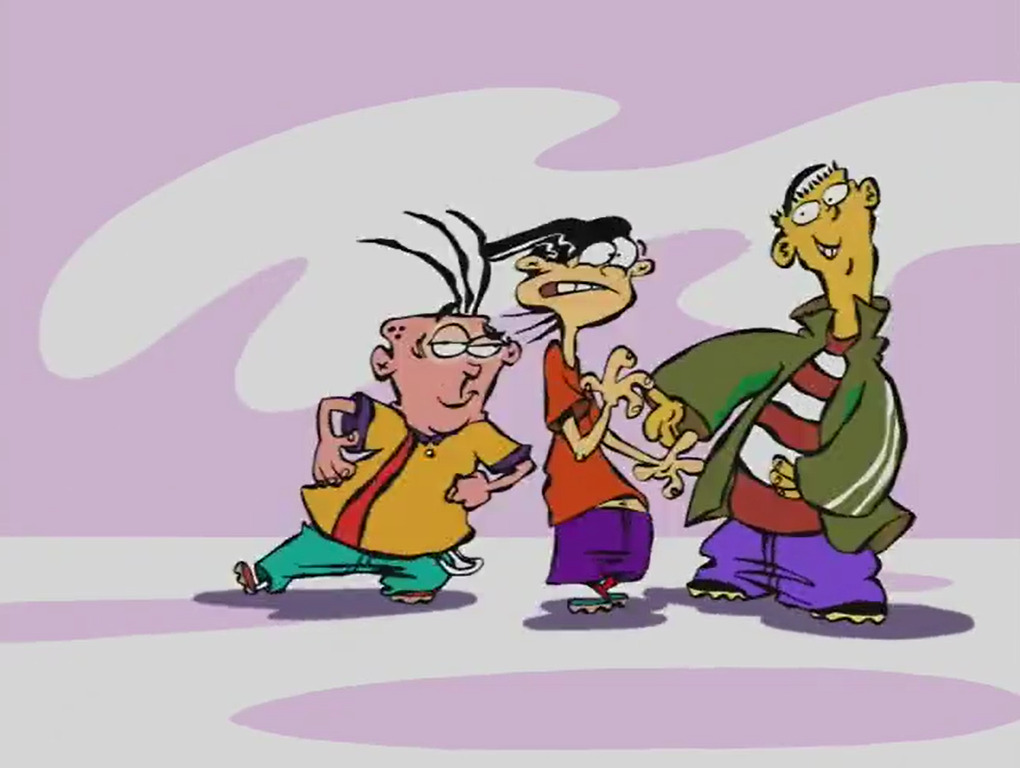
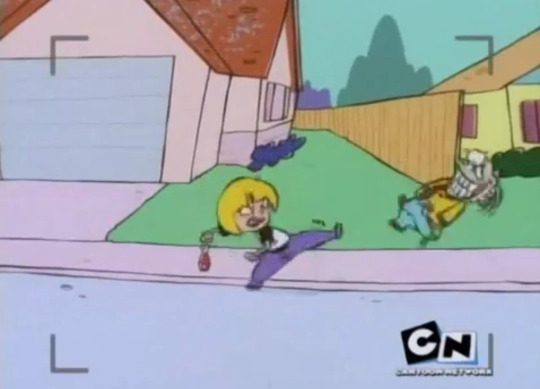
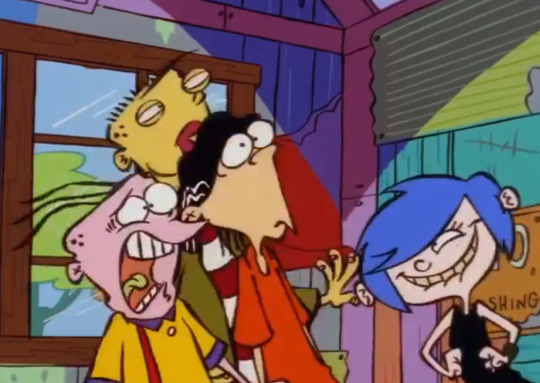
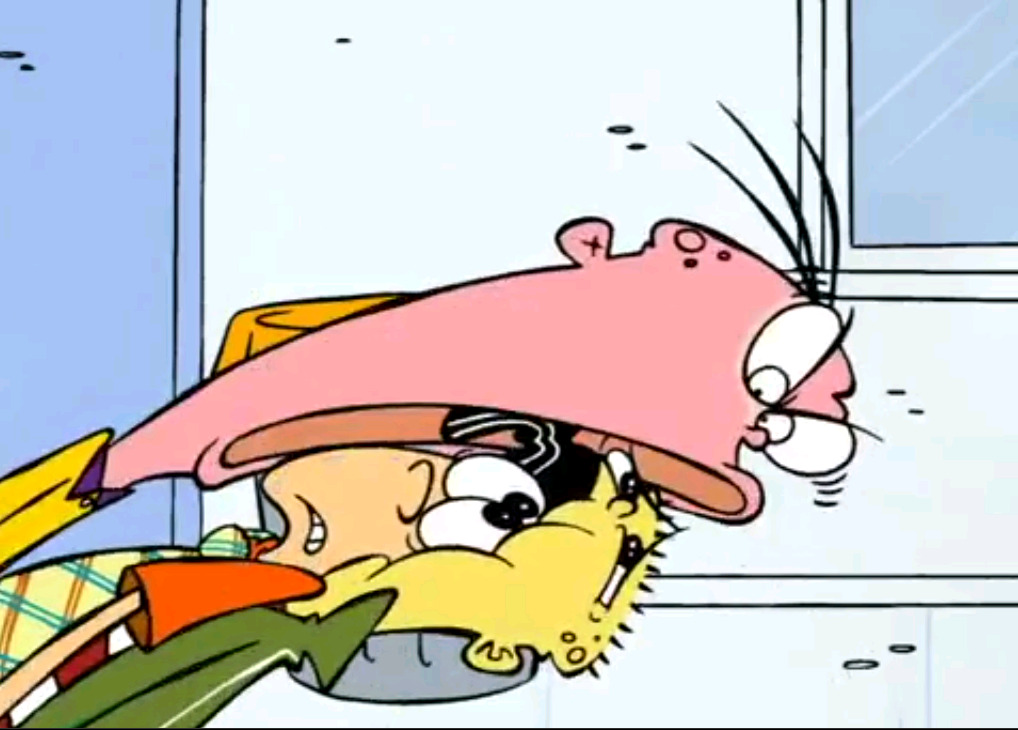
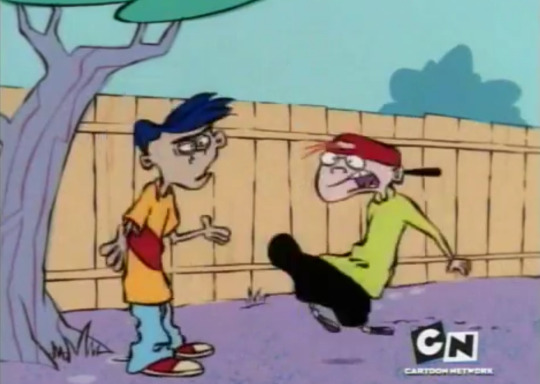
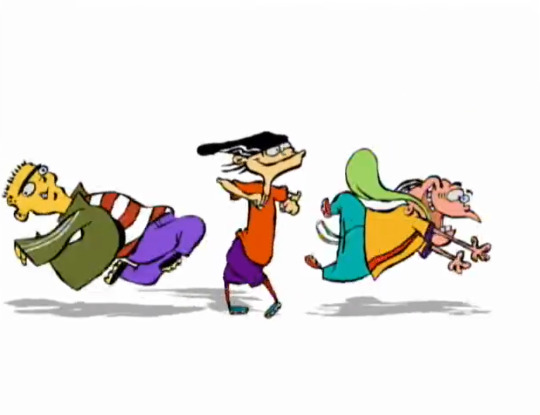
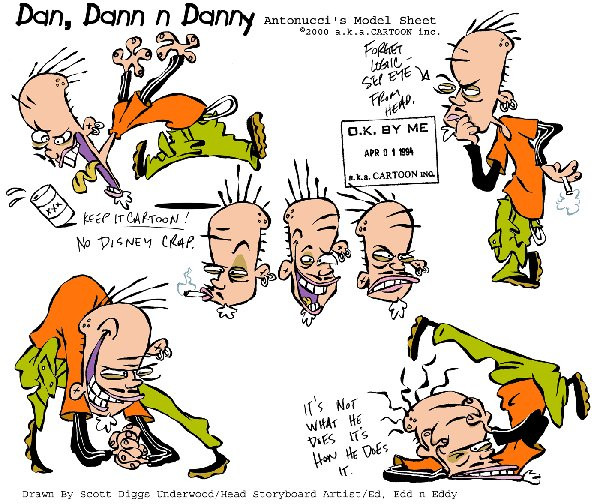
Many of us remember that classic distinct walk and run cycles that of the characters in EEnE had. You can tell Antonucci put a lot of love into this show, not through just the animation, of course. It's interesting to see how differently the characters generally move based on their own personalities, which is something I like to do too in my. It was often quoted by Chuck Jones as being one of the important aspects of animation (and something he personally put too much emphasis on, in all honesty), and surprising to see animation this "animated" for what could be done on a television animation budget. EEnE had some of the most expressive animation since the likes of Jones and Clampett who mastered expressive animation in their days.
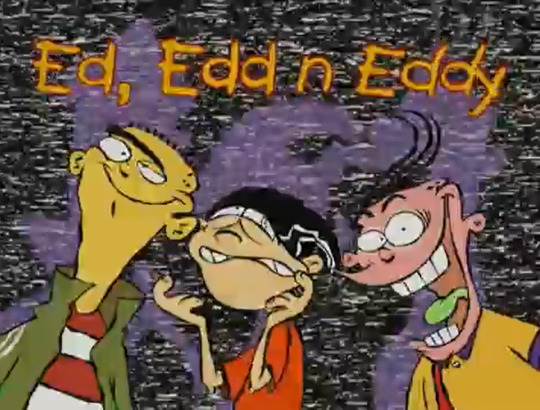
Ed, Edd n' Eddy promo from 1998
Antonucci claimed to be bored with the clean look of it's contemporaries and wanted to look different from other CN shows. EEnE was a cartoon that wasn't streamlined in anyway. It's look is, what I like to call, very "anti-mainstream" at best. EEnE was a show that never had an abundance of merchandise like it's fellow shows, Dexter's Laboratory and The Powerpuff Girls. As much as I do like those two shows, they're more simplified, yet still distinctive art style was influence by UPA, Hanna-Barbera and Jay Ward, whose cartoons were already economically produced for the time when animation was undergoing budget cuts, and therefore were easier to draw and animate, and can be easier to make marketable and appealing to the masses (look at The Minions). On a personal note, I'm not terribly fond of rigid character designs as an artist and if I were to ever animated or work on a comic, like Family Guy (post-season 4) or Garfield, I'd get real fustrated immediately. Simply put, EEnE's design wasn't efficient and simple, which, naturally, kept it from being as marketable or as appealing to some, but the characters can still be recognizable. It's evident in the first season that the animation and character designs took some time to get right when being outsourced.
"a.k.a. Cartoon shipped cels to Korea for initial animation. After arriving from Korea, animators ran the negatives through digital noise reduction (DVNR), a technology used to digitally clean up dirt and grain as film is transferred to tape. Antonucci referred to this as "a necessary evil" because it damaged the animation. Upon seeing the harmful effects on the pilot, he minimized DVNR to purify colors and avoid affecting the image as much as possible." - Wikipedia
I imagine this show was not only fun and, if, challenging to storyboard, but must've been very expensive to produce, I mean, tracing off a drawing three times, holy crap! The show even had production delays during it's fifth and sixth season, and this was when there was that permanent switch to digital-ink-and-paint animation.
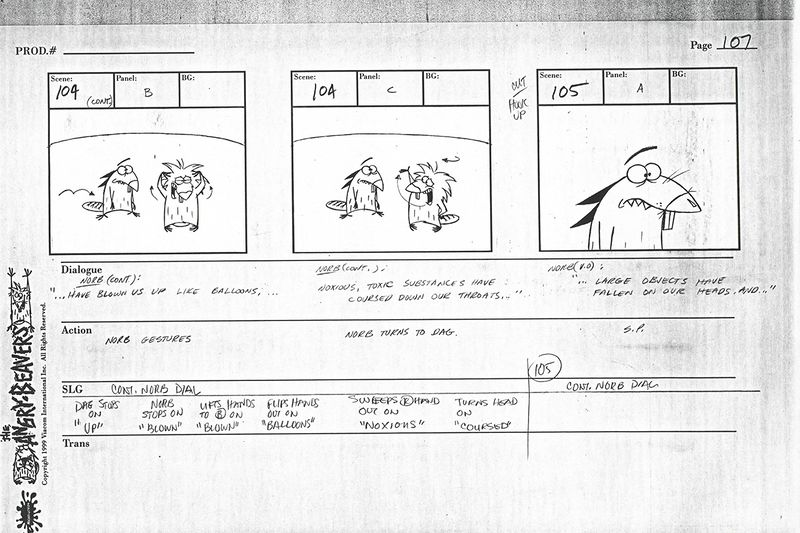
Storyboard of Season 5's All Eds Are Off
Storyboard of Season 5's A Fistful of Ed by Raven Molisee
It's also very well-known at this point by animation fans that EEnE was THE last western animated series to use traditional hand-painted cel animation up until 2004 (note: The last official cel-animated production is an anime named Sazae-san as of 2013), as by 2000, many cartoons have made the permanent switch to the less time-consuming digital-ink-and-paint process. Antonucci openly detested the modern animation technique and was very old-school when it came to animation in general (I also recall an interview where he straight-up trashed 3D animation like Pixar and Dreamworks, which makes me laugh out loud, despite my heavy respect for Pixar and, for most of the part, Dreamworks), something that's hard not to admire.
One of the things I appreciate about this show, on a personal level, is that Danny Antonucci strikes me as an old soul. Eddy is depicted as having a room full of records, a disco ball and a poster of Tom Jones and Barry White.

EEnE's trademark music was inspired by (thanks to the great Patric Caird) Bob Crosby and The Bob Cats song "Big Noise from Winnetka", influenced by jazz music of the 1940s and 1950s, keeping up with the show's Golden Age of Animation influence, even going as far as having the series finale movie titled "Big Picture Show", the term "picture show", old-timey way of referring to motion pictures in general. The same things I do in my works, as an old soul myself, and something mainstream media doesn't do with child characters. The timelessness of the show is another enduring aspect, there's no rock music, the characters don't dress like they're from the late 90s or 2000s, and there's no references to computers, video games or even a cellphone, making it pretty unique and refreshing, even when compared to shows of today. One of the reasons Antonucci did was so the show can appeal to multiple generations. But, a lot of EEnE could also qualify as a projection of Danny Antonucci himself, that lead to the uniqueness of this show and his other projects. He based the Eds and Rolf off of himself, The Eds are also based off of Antonucci's own sons, while Rolf was also based on Antonucci's own family, Jimmy was inspired by Antonucci's cousin and The Kankers Sisters' were based on girls he knew in middle school who would harass him, something he doesn't like the characters. When you think about it, any work that ties strongly to a person's own person (a good example would be Stephen Hillenburg, who was a marine biologist before creating SpongeBob) instead of simply being a cookie-cutter mainstream show, can, as I said, create an identity for one's work for other to consume and engage in, that's like meeting them in person, having that one thing no one else has. Developing your own trademarks and style that's YOU!
Also, like many of it's fellow cartoons before and after, EEnE was no stranger to it's mountains of adult humor and references, some of which, even as a kid, I recognized.
Under Eddy's bed in Season 3's The Day The Ed Stood Still
It fits with the show's sincere, if exaggerated, depiction of children (more like a G-rated South Park), as it reminds us that we weren't always as innocent and angelic as mainstream continuously wants us to believe. One of these adult jokes would be, of course, the infamous 'sextant' scene from the series finale and a particular moment in Rent-A-Ed where Rolf shamelessly drops his towel in front of the kids who, in response, are grossed out. These two scenes don't even try to hide these jokes, it could be right up there with the likes of Rocko's Modern Life. Oh, and who can forget The Kankers' constant thirst for the Eds (I seem to recall these girls did strip those boys out of their clothes twice, i.e. "Nagged to Ed" and "Honor Thy Ed"). As far as appeal to adults go, I mentioned already that this show had some very fast-paced writing that, while it's very intelligently executed, doesn't completely fly over the heads of kids too much, as they'll likely get a big laugh at the absurdity and nonsensical farce as much as adults will. All ages alike can be instantly be engross by the show's expressively quirky animation. Kids can enjoy EEnE as a source of escapism, while adults can equally, as well as being reminded of their own childhoods, additionally, while being enchanted by the show's unpredictability in it's unique approach to storytelling and humor. There are some pop culture references (there's not much actually) to things adults will most likely grasp on, as well as hints and suggestions regarding the unseen adults' personalities and situations in the show, for example, The Kankers' mother is implied to be a three time divorcee, and has an apparent dislike for men. There are episodes like "Luck of the Ed", one that got an insane amount of risque jokes, considering it's plot revoles around dirty magazines managed to makie it air with a TV-Y7 rating no less!!!! An episode named "They Call Him Mr. Ed" featured a particularly hilarious wordplay of the word "up", it keeps building UP on the word until the very end and gets increasingly funnier and more creative as always, while the main plot of the episode seems to play as sort of a satire/reflection of business and office life in general, but....with kids, you know, something adults will most likely have a good laugh at. The sister episode, "For the Ed, By the Ed", is another example of politics played with child characters, but in it's own memorable way of having Eddy trying to ruin Plank by becoming the "King of the Cul-De-Sac", could be interpret as a subtle lampoon on politics.
One of the most enduring elements of EEnE is the array of mysteries and clues we've initially missed as viewers. Many of us remember that no adults almost never appeared in the show, reminiscent to Charles Schultz's Peanuts whose adults have never made any physical appearances, expect they spoke unintelligibly (i.e. trumpet sounds) while off-screen.
"That's intentional too, throughout the long days of summer you simply didn't see anyone else's parents about and sometimes you didn't even see your own. Take the 'Edd's parents' factor, their means of communicating with him via sticky notes, my parents worked long hours and they left me written messages in much the same way." - Mr. Antonucci
Eddy's dad from Season 5's Mission Ed-Possible
Eddy's mother from Season 5's Smile for the Ed
Jonny's house from Season 5's A Tween Rock and An Ed Place
The kids' personalities, references to their homelifes', small details in their houses and dialogue leaves a lot the viewers interpretation about what their parents and life outside of the cul-de-sac maybe like (for instance, fans have theorized Kevin is a city kid, living with a single dad, having the belief that his parents are divorced, considering he only mentions his dad and how his garage is filled with jawbreakers as Kev's dad works at a jawbreaker factory. In fact, Season 3's "From Here To Ed", had Kevin saying "Suburbs are weird"). A really great way to keep viewers glued to any piece of media is living something to their imagination or interpretation. Although, the most blatant, regarding the parents, are The Kankers' family, as their first episode blatantly establishes that each of the girls come from three different dads, and how much of there behavior and views towards the Eds (or males in general) is a reflection of their very own mom. Another well-known mystery is the unknown scam shown at the beginning of Big Picture Show. And, of course, I can't forget to mention the famous Edd's hat mystery. Antonucci jokingly said they were planning to show Edd "hatless" in Big Picture Show, but that never came about, leading to the mystery forever being unsolved, which is for the best, anyways. These are one of the key things that create some re-watch value for me and many of you aspiring artists out there. I'm reminded of how CatDog (another personal favorite show of mine) had many unsolved mysteries, such as "Why/how does Rancid Rabbit have some many jobs?", "Who are CatDog's real parents?", "How do CatDog go to the bathroom?" or the many background details one has to notice by, like I said, watching over and over again.
While EEnE was indeed a great show, it still did had it's flaws. Minor criticism such as Nazz as a character; the typical upbeat girl-next-door to the boys of the neighborhood, is a pretty bland uninteresting character in a show rich with characterization (the Nazz-centric episode "Boys Will Be Eds" was funny, but didn't really give Nazz the spotlight she desperately deserved and the fact that this was the ONLY Nazz episode of the whole series), though, fair enough, she did get fleshed out, gradually, later on, from season 5 and Big Picture Show, but before this, her character did contrast to Sarah and The Kankers Sisters, the latter being the most interest female characters in EEnE. As much as I do like season 4 and season 5, these seasons are pretty mixed. For instance, the last half of the fourth season featured particularly mediocre episodes, such as A Case of Ed.
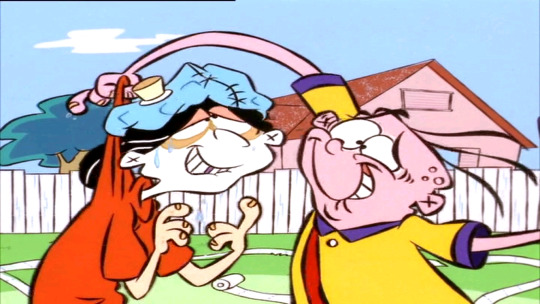
An episode where the only funny things comes from Ed and Eddy's nonstop teasing to Kevin, who is grounded. In the show's usual brand of humor, there teasing gets more and more unexpectedly absurdly funny, giving us one of the most hilarious moments the show had ever given us:
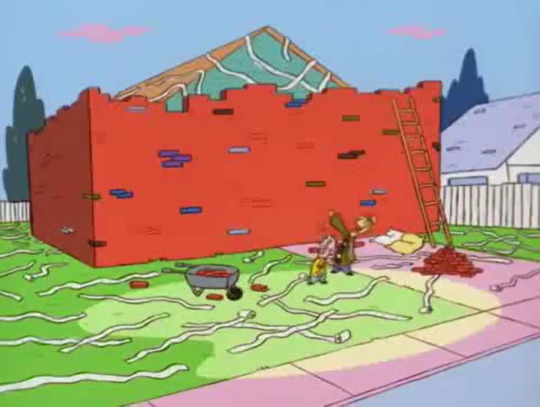
The weakness of A Case of Ed steams from Edd, of all people, falling for Eddy's prank of telling Edd that he's so sick to the point of death, which causes Edd to burst into tears and wish everyone a goodbye. While it can be funny (I'm speaking as a big fan of black comedy), here, it comes off as just rather tasteless and cruel without any sort of weight to it and Edd is somewhat pretty out of character, being quite gullible. But still, what saves this episode is Edd becoming 'Edd' once again, and Ed and Eddy getting their just dessert in the end of a now "ungrounded" Kevin beating the hell outta them. While Eddy and Ed have pranked Edd and the others numerous of times before, this example is just downright nasty and unforgivable. Honestly, if I were friends with those two, I'd never speak for as long as I live. My Fair Ed is a great example of Ed and Eddy's prank; pretending to be polite to everyone, is executed thoroughly, done very hilariously and tastefully. Ed and Eddy go too far with this prank, intentionally hurting everyone, and later straight up tell Edd they fooled them all this time.
Now, Season 5 is already a very polarizing season.
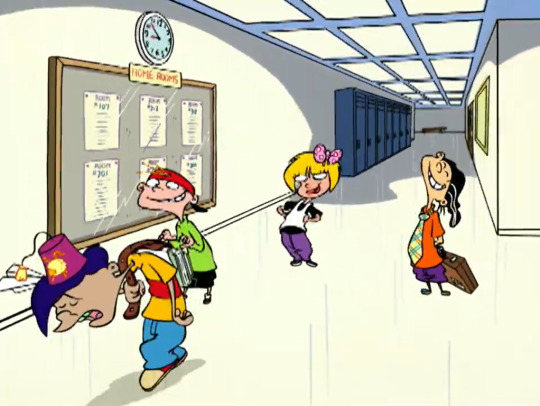
Out with the Old, in with the Ed
As I've said, I don't mind it and it's not a perfect season. Putting the characters in school did introduce an interesting dynamic to the characters and the show itself. Regarding the school idea, some could debate that the season four episode, Stuck in Ed, is the writers basically running out of steam for ideas about The Eds' summer adventures. The fifth season did create some memorable episodes, while at the same time, there are episodes that fairly forgettable and/or some school episodes that were pretty cliché, which is something that EEnE subverts at. While EEnE was a pretty hyperactive show to begin with, it just never knew when to take a break during the fifth season, it gets pretty exhausting from either laughing uncontrollably or being annoyed by constant shouting and screaming, and non-stop action. The third and fourth season, on the other hand, had it's fair share of quietness, such as a scene in season three's Dueling Eds and season four's Postcards from Ed. Still, without season five, we wouldn't have gotten the character development, no Big Picture Show and EEnE wouldn't just ended with Take This Ed and Shove It, an episode that, given if it did end on this note (for those who don't know, EEnE was originally going to end in it's fourth season, but was given two more by popular demand), EEnE would probably not have been as memorable and as beloved as it still is to this day. Plus, there are still some ideas the show would have put to life, had the sixth season been stretched out, but it obviously didn't happen, sadly. The most interesting thing about this, however, is how the fifth and sixth seasons take place in the fall and winter, and included some nice continuity from previous episodes. Big Picture Show could very well be set a year from summer seasons, season one to four.
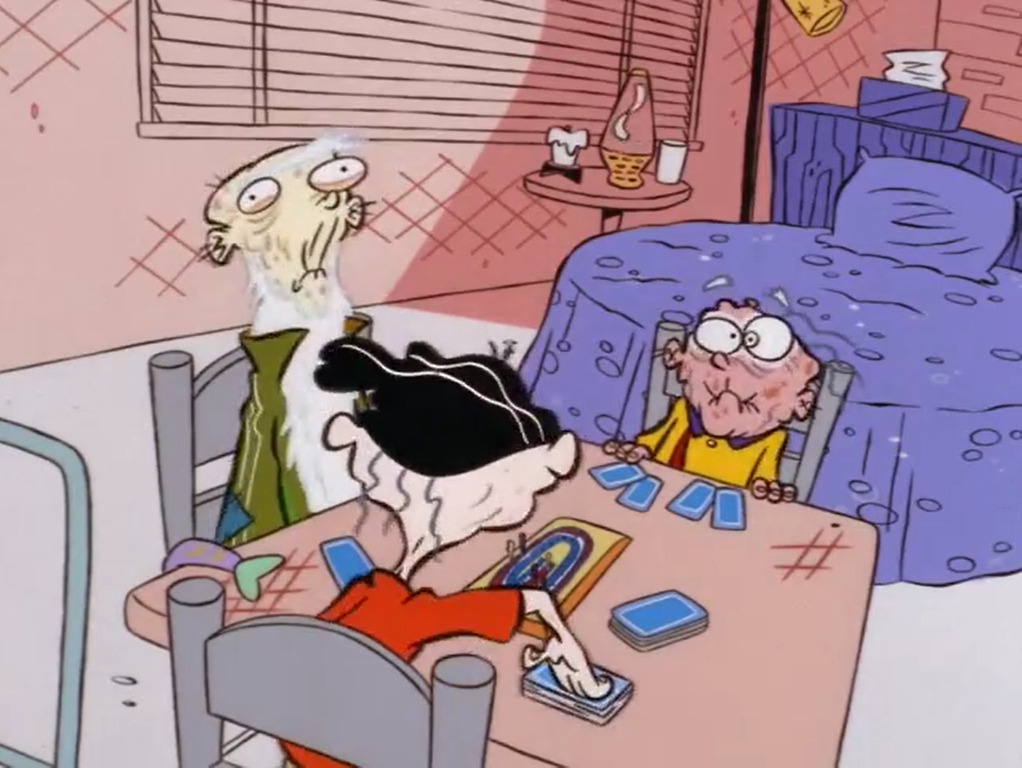

Deleted scene from Take This Ed and Shove It
Big Picture Show is, to this day, considered to be one of the best series finales in any TV show, and it's not hard to see why. Unlike Take This Ed and Shove It, BPS felt complete. It answer much of the show's questions, opened the door to many new things, like to one of the main characters and had a slightly different tone from the rest of EEnE's prominently comedic edge. I won't spoil it, but it's a nice, satisfying watch if you either haven't seen it or if you're new to the show.
Even long after EEnE ended about 14 years ago, as of this writing, this show still feel fresh, funny and engaging to watch, and still has a strong dedicated following to this day of both old and new fans. Given the series' ten year run, you could say this show raised a generation, and looking back, takes us into the fantastical world of EEnE and Danny Antonucci's mind, appreciative of it's uniqueness and abundance of ideas it provided. EEnE is a timeless and one-of-a-kind show that will forever endure CN fans.
EEnE has had a personal impact on me, not only for the nostalgia, but as a lesson to me and to every other aspiring animator/artists about have their own ways of storytelling, humor and characterization, something that most of us tend to forget or just intentionally ignore, unfortunately. Subversion should be the way of creating ideas and creative freedom is what EEnE and other Cartoon Network shows from this era what they were and what they're best remembered for. It's legacy will live on, hopefully, forever!
Thanks to the likes of Boomerang, HBO Max and the recent complete DVD release, there are new generations who are now getting into EEnE and other Cartoon Network classics, which I'm glad for. I salute you Mr. Danny Antonucci.